


 Donate



A £150,000 grant from Beatson Cancer Charity has supported this ground-breaking project, enabling the installation of a cutting-edge 3D microscope at the University of Glasgow. This project at the University of Glasgow is set to provide researchers with unprecedented insight into how cancer cells behave, interact and respond to treatment.
The funding has supported the installation of a cutting-edge 3D spatial biology microscope, representing the first deployment of this technology in Europe. The platform will enable scientists to study cancer tissue in its natural three-dimensional structure, offering a far more detailed and accurate view of tumour biology than has previously been possible.
PICTURED: PYXA Microscope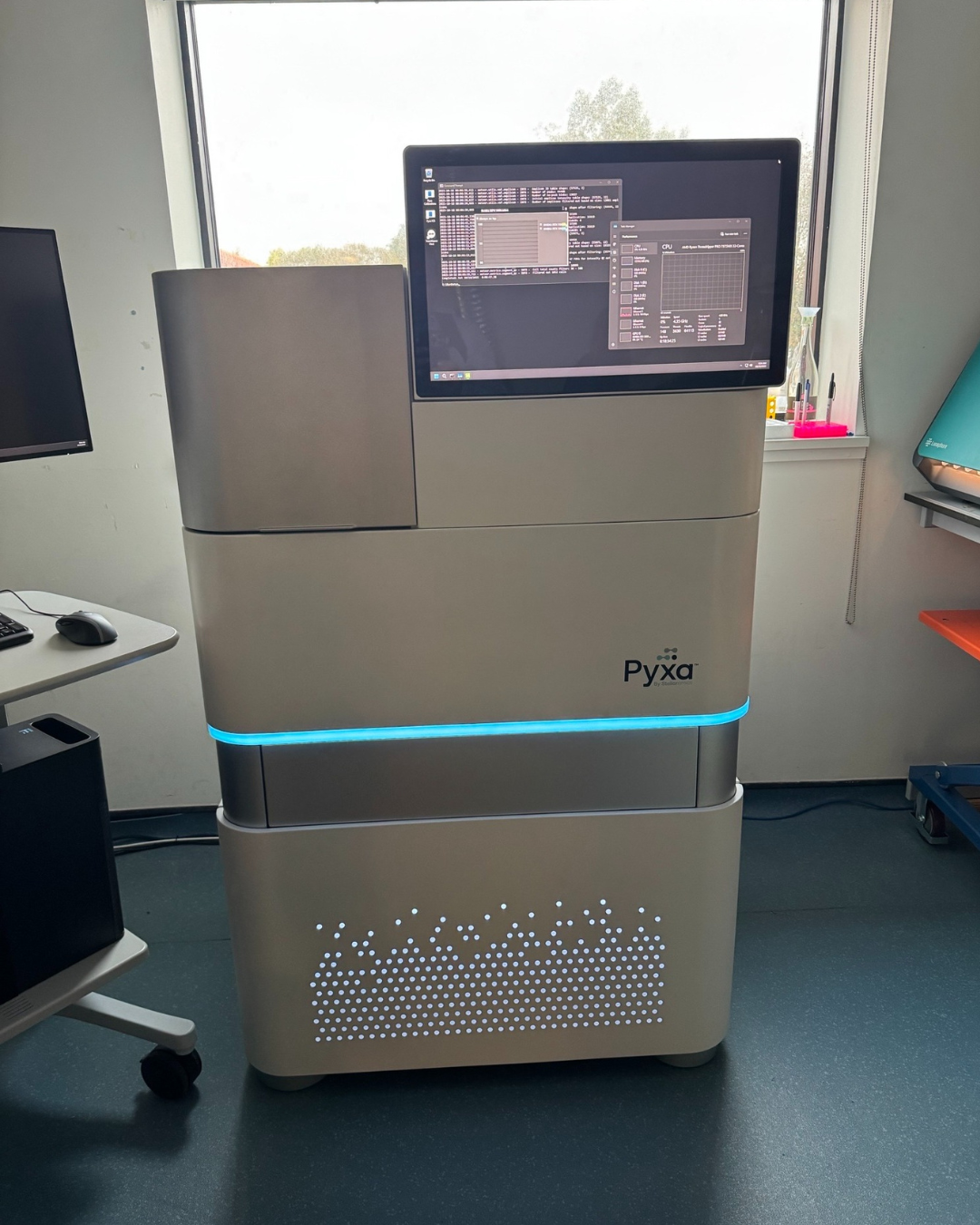
Why 3D Matters in Cancer Research
Traditional methods often require tissue samples to be flattened into thin sections. While valuable, this process can remove vital spatial context - the relationships between cancer cells, immune cells and healthy tissue that influence how a tumour grows, spreads or responds to treatment.
This new 3D approach changes that completely. Using the Pyxa™ platform developed by Stellaromics, researchers can visualise tumours in unprecedented detail, mapping thousands of genes across intact tissue samples. This allows them to see cancer as it truly exists inside the body, rather than as a simplified snapshot.
Accelerating Discovery at the University of Glasgow
At the University of Glasgow, the microscope will support a wide range of cancer research projects, enabling scientists to explore critical questions such as:
- How cancer cells communicate with their surrounding environment
- Why some tumours evade the immune system
- What makes certain cancers resistant to treatment
By understanding these complex interactions in three dimensions, researchers can uncover patterns that were previously hidden, helping to identify new targets for therapies and more precise treatment strategies
What This Means for Patients
While this research is happening in the lab, its ultimate goal is firmly focused on improving outcomes for people affected by cancer.
The insights gained from this technology could help:
- Improve diagnosis by identifying more accurate biomarkers
- Guide the development of personalised treatments
- Support earlier and more effective intervention
By building a clearer picture of how cancers function at a cellular level, researchers move closer to treatments that are tailored to individual patients, reducing side effects and increasing effectiveness.
Looking Ahead
The deployment of this 3D spatial biology platform marks an exciting step forward for cancer research in Scotland and beyond. As researchers begin to generate and analyse data from this technology, new discoveries will continue to emerge, driving progress towards better understanding, better treatments and ultimately better outcomes for patients.


